
League One's finances: the bigger financial sustainability story below the Premier League


Why losses, owner funding and balance sheet weakness continue to shape the financial sustainability picture across League One.
The latest accounts provide an important insight into League One financial sustainability, highlighting the extent to which many clubs continue to rely on owner funding, related-party loans and balance sheet support.
Recent headlines about Premier League losses can make lower-league finances feel small by comparison. However, the latest League One finances suggest a wider problem: many clubs are spending far more than they generate, relying heavily on owners and related parties to keep going.
All current League One clubs have now filed their 2025 accounts, although several were late (the last filing arrived on 13 April 2026, after a 31 March deadline). Filing late can be a warning sign. If a club struggles to report its financial position on time, it may reflect weak controls, stretched resources, or financial pressure.
What the 2024/25 results show
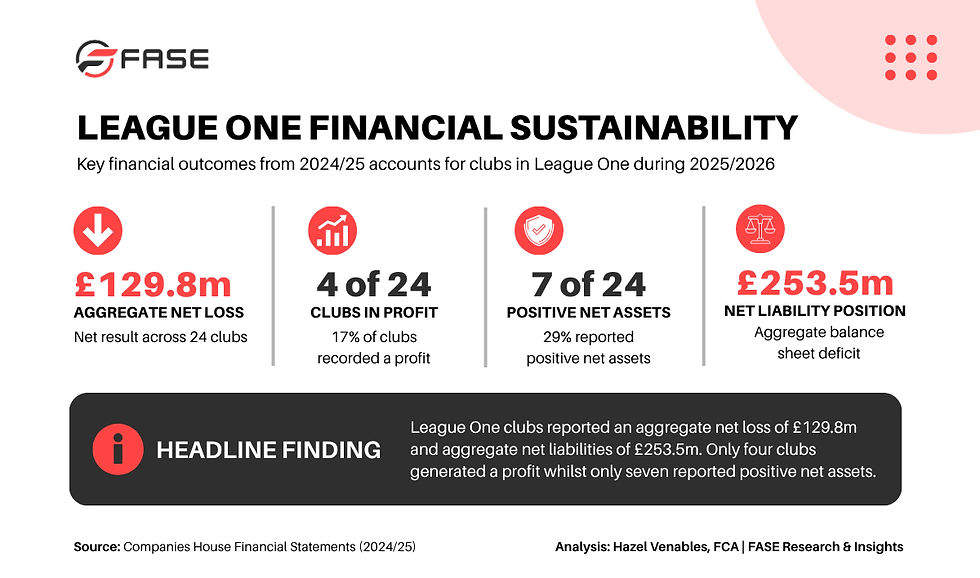
Across the current (2025/26 season) League One clubs, total losses for 2024/25 were just under £130 million.
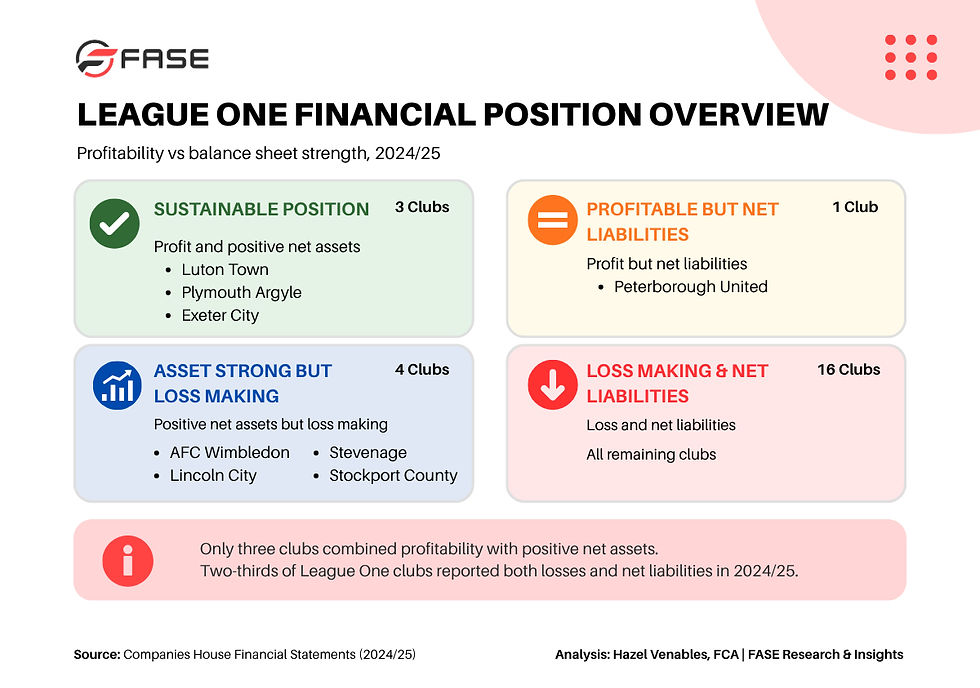
Only four clubs reported a profit (Exeter City, Luton Town, Peterborough United and Plymouth Argyle) and those profits were driven mainly by player trading, though not exclusively, rather than day-to-day operations. Profits ranged from approximately £0.35m at Exeter City to more than £14m at Luton Town.
At the other end of the spectrum, Cardiff City, Bolton Wanderers and Huddersfield Town recorded combined losses exceeding £71 million. These figures highlight the financial pressure experienced by several clubs operating within the division.

The largest losses were at Cardiff City, Bolton Wanderers and Huddersfield Town, with a combined loss of more than £71m. Put simply, these clubs are losing money at a rate that is hard to sustain. On average, their losses were roughly 80% or more of the revenue they generated, whilst Cardiff City's losses were even larger than its revenue, producing a net loss margin of approximately -135%.
Clubs have been kept afloat through owner support. During the year, around £49m was added through new shares and capital contributions. At the same time, “friendly” loans from owners, directors, group companies and other related parties rose by just over £150m, taking total related-party borrowing to more than £0.5bn.
Some clubs have little or no such debt, for example Exeter City and Lincoln City, whilst others have borrowed more than £100m, including Cardiff City and Reading. Huddersfield Town also reported related-party debt exceeding £80m.
Balance Sheets: more owed than owned

Looking at balance sheets, the 24 clubs collectively owe around £250m more than the value of what they own. In everyday terms, that means the league as a whole would not be able to pay its bills if all debts fell due at once.
Only seven clubs currently show a positive net asset position: Exeter City, Lincoln City, Luton Town, Plymouth Argyle, Stevenage, Stockport County and AFC Wimbledon. If you remove these seven clubs, the remaining seventeen clubs together have net liabilities of just over £350m.

Why it matters
Some clubs are posting losses that are substantial relative to their income. Net loss margins reported this season include approximately 63% for Barnsley, 70% for Bolton Wanderers and 130% for Burton Albion.

These are not one-off blips. The pattern has persisted over time. With the wider economy under pressure, reliance on owner funding and growing related-party debt increases the risk of financial shocks.
Whilst attention often stays on the Premier League, the long-term stability of the lower leagues remains crucial to the health of the wider football pyramid.
METHODOLOGY
All figures were sourced and collated from financial statements filed at Companies House. They reflect the 2024/25 financial results for the clubs that competed in League One during the 2025/26 season. Analysis is based on publicly available statutory accounts and reported balance sheet information.


Comments